

What the patient actually sees
This is a category search for dentists, screenshotted from a client engagement in 2014. It is the screen on which most of the decision gets made.
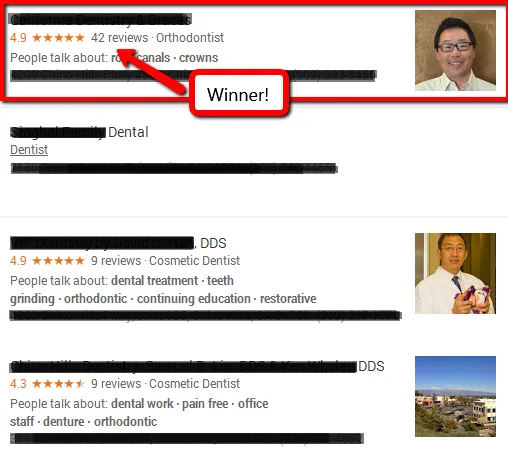
Nothing in that screenshot is about clinical quality. The practice at the top won on review count, star average and profile completeness — and the practices below it are, for most patients, never opened. That is the whole mechanism, and it is why review strategy is not a soft marketing concern for a dental practice but a direct input to new-patient volume.
Why dentistry is a harder case
Choosing a dentist combines high anxiety, meaningful cost and genuine switching friction. Prospective patients therefore research thoroughly — and reviews carry more weight in that decision than in most local categories.
What makes the category genuinely difficult is the asymmetry in how you may respond. An ordinary business can reply to a bad review by correcting the record. A dental practice largely cannot, because acknowledging that the reviewer is a patient — let alone discussing their treatment — discloses protected health information. This remains true even when the patient has publicly disclosed it themselves; their disclosure does not release you from the obligation.
The result is that practices are visibly constrained in public in a way that can read as indifference, and every so often a practice responds in detail and turns a one-star review into a regulatory matter.
Responding to negative reviews correctly
There is a workable pattern. Acknowledge the feedback without confirming or denying any treatment relationship. Express a general commitment to patient care. Provide a direct, non-public route to resolve it — a name and a phone number. Then move the entire substance of the discussion offline.
This reply is not written for the reviewer. It is written for the next prospective patient reading it, who sees a practice that responds promptly, professionally and without arguing. That impression does more work than any rebuttal would, and it carries no compliance exposure.
Where a review is genuinely fraudulent — a competitor, or someone who was never a patient — platforms have removal processes. They work better with documented evidence, and that is something we assemble as part of our reputation repair work.
Building review volume the compliant way
The most reliable improvement available to most practices is not removing bad reviews but generating enough genuine recent ones that the average recovers and the profile looks active.
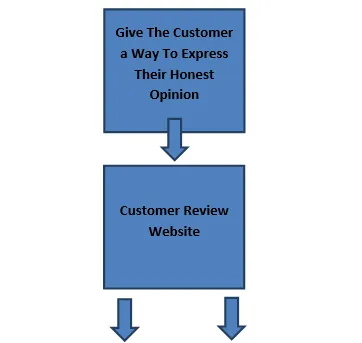
- Ask at the right moment. Immediately post-appointment, while the experience is fresh and positive, produces far better response rates than a delayed email.
- Make it frictionless. A direct link to the review form. Every extra step loses a meaningful share of people.
- Ask everyone. Selectively soliciting only patients you expect to be happy — review gating — violates the terms of most major platforms and is detectable.
- Never fabricate. For a healthcare practice, being caught with fake reviews is far more damaging than the reviews being addressed.
Beyond reviews
An accurate, actively maintained Google Business Profile with correct categories, hours and insurance information. Consistent practice details across healthcare directories and insurer listings, which frequently rank for name searches and are usually neglected. A practice website that loads quickly on a phone, because most of this research happens on one.
For practices in our primary markets, this pairs with local search work — San Diego and Los Angeles are both dense, competitive dental markets where local pack position translates fairly directly into new-patient volume, and the Inland Empire is considerably less contested than either.
This page describes general reputation and marketing practice. It is not legal or compliance advice — confirm your specific obligations with your own counsel or compliance adviser.